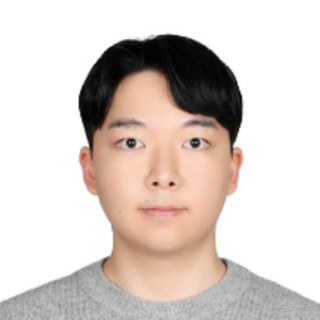
About
My research focuses on building
reliable and robust artificial intelligence.
I currently study how Vision-Language Models (VLMs) generalize and adapt in open-world, non-stationary, and distributionally shifting environments.
I am a Ph.D. student in Computer Science at the University of Texas at Dallas, advised by Prof. Yunhui Guo. Prior to my Ph.D., I received my M.S. in Artificial Intelligence and B.S. in Computer Science from the University of Seoul. During my M.S., I was advised by Prof. Kyungwoo Song at Yonsei University and Prof. Jiyoung Jung at the University of Seoul.
Now ongoing projects
-
Since Sep 2026
Open-Set Test-Time Adaptation of Vision–Language Models for Object Detection
Source-free adaptation for reliable detection under distribution shift, preserving known-class recognition while localizing unfamiliar objects and explicitly distinguishing them from known categories and background.
-
Since Oct 2026
Continual Learning for Long-Sequence Video QA with Hybrid Mamba
Robust continual learning for long-sequence video QA, using the context-retention capabilities of hybrid Mamba architectures to preserve long-range temporal dependencies and mitigate forgetting across tasks.
-
Since Aug 2026
Psychological Memory for Long-Term Conversational Agents
Agentic construction of human-grounded datasets and benchmarks to evaluate how long-term conversational agents integrate individual traits and evolving psychological states into personalized, supportive responses.
Publications
In review
-
Preprint
CAMA: Calibrated Anti-Collapse Marginal Alignment for Test-Time Adaptation of Vision–Language Models
Submitted to AI Top Conference 2027
2026
-
SAC 2026Conference
CBPE: Causal-aware Blood Pressure Estimation with Multimodal Data
ACM Symposium on Applied Computing (SAC), 2026
2025
-
ICDM 2025Conference, short paper
Towards Generalizable Time Series Forecasting via IB-Regularized Transformer-Diffusion
IEEE International Conference on Data Mining (ICDM), 2025
-
CIKM 2025Conference
Causal Effect Variational Transformer for Public Health Measures and COVID-19 Infection Cluster Analysis
ACM International Conference on Information and Knowledge Management (CIKM), 2025
-
IEEE Access 2025Journal
Enhancing Global and Local Context Modeling in Time Series Through Multi-Step Transformer-Diffusion Interaction
IEEE Access, 2025 SCIE, JCR 2024 IF=3.9
-
KBS 2025Journal
Multi-Query Frequency Prompting for Physiological Signal Domain Adaptation
Knowledge-Based Systems, 2025 SCIE, JCR 2024 IF=7.6
-
UAI 2025Conference
Flat Posterior Does Matter For Bayesian Model Averaging
Conference on Uncertainty in Artificial Intelligence (UAI), 2025
2024
-
IEEE Sensors J. 2024Journal
Few-Shot PPG Signal Generation via Guided Diffusion Models
IEEE Sensors Journal, 2024 SCIE, JCR 2022 IF=4.3
-
IJCAI AI4TS 2024Workshop Best Paper Honorable Mention
Sequential Treatment Effect Estimation with Variational Transformers: Application to COVID-19 Infection Clusters
IJCAI Workshop on AI for Time Series Analysis (AI4TS), 2024
-
Pattern Recognition 2024Journal
Bibimbap: Pre-trained models ensemble for Domain Generalization
Pattern Recognition, 2024 SCIE, JCR 2022 IF=8.0
* equal contribution
Background
Experience
-
Aug 2025 – Dec 2025
Associate Researcher
Machine Learning and Artificial Intelligence Lab, Yonsei University
Seoul, South Korea
-
Aug 2024 – Feb 2025
Visiting Scholar
School of Computer Science, Carnegie Mellon University
Pittsburgh, PA, USA. Supported by IITP (Institute for Information & Communication Technology Planning & Evaluation).
-
Apr 2023 – Aug 2025
Graduate Researcher
Machine Learning and Artificial Intelligence Lab, University of Seoul
Seoul, South Korea
-
Sep 2021 – Apr 2023
Undergraduate Researcher
Machine Learning and Artificial Intelligence Lab, University of Seoul
Seoul, South Korea
Education
-
Jan 2026 – Dec 2030 (expected)
Ph.D. in Computer Science
The University of Texas at Dallas
Richardson, TX, USA. Advisor: Yunhui Guo
-
Mar 2023 – Aug 2025
M.S. in Artificial Intelligence
University of Seoul
Seoul, South Korea. Advisor: Jiyoung Jung. Co-advisor: Kyungwoo Song (Yonsei University)
-
Mar 2016 – Feb 2023
B.S. in Computer Science
University of Seoul
Seoul, South Korea
Past projects
-
Feb 2025 – Aug 2025
Failure-Aware Causal Modeling through FMEA-Driven LLM Adaptation
Leveraging domain-specific technical documents from the automotive industry to pretrain and adapt LLMs for generating accurate, component-targeted FMEA scenarios via causal reasoning.
-
May 2024 – Oct 2024
Causal Discovery in Photoplethysmography Attributes
Uncovering causal relationships among PPG signals and diverse physiological attributes (e.g., race, age) to enable robust and accurate arterial blood pressure (ABP) estimation.
-
Feb 2024 – May 2024
Conditioned Generation for Aircraft Trajectory Data
-
May 2023 – Feb 2024
Domain Generalization via Synthetic Photoplethysmography Data Generation
Address data imbalance in medical datasets by using regressor-guided diffusion models to generate high-quality, diverse PPG signals, significantly enhancing Arterial Blood Pressure predictions.
-
Mar 2023 – Feb 2024
Causal Prediction of COVID-19 Infection Cluster Dynamics
Developed a machine learning model using a Transformer to predict the infection spread and duration of coronavirus clusters by embedding and processing both cluster and patient information.
-
Jul 2022 – Feb 2023
Robust Ensemble Learning for Chemical Graph Data
Awards and honors
-
Aug 2024
Best Paper Honorable Mention
IJCAI Workshop on AI for Time Series Analysis (AI4TS)
For “Sequential Treatment Effect Estimation with Variational Transformers”.
-
Jul 2023
Summer Academic Paper Presentation Conference
Korean Data Analysis Society (KDAS)
For “Bibimbap: Pre-trained models ensemble for Domain Generalization”.